
Bibcode
DOI
Calamida, A.; Corsi, C. E.; Bono, G.; Stetson, P. B.; Prada Moroni, P.; Degl'Innocenti, S.; Ferraro, I.; Iannicola, G.; Koester, D.; Pulone, L.; Monelli, M.; Amico, P.; Buonanno, R.; Caputo, F.; D'Odorico, S.; Freyhammer, L. M.; Marchetti, E.; Nonino, M.; Romaniello, M.
Referencia bibliográfica
The Astrophysical Journal, Volume 673, Issue 1, pp. L29-L33.
Fecha de publicación:
1
2008
Revista
Número de citas
39
Número de citas referidas
30
Descripción
We present deep and precise photometry (F435W, F625W, F658N) of ω
Cen collected with the Advanced Camera for Surveys (ACS) on board the
Hubble Space Telescope (HST). We have identified ~6500 white dwarf (WD)
candidates, and the ratio of WD to main-sequence (MS) star counts is
found to be at least a factor of 2 larger than the ratio of CO-core WD
cooling to MS lifetimes. This discrepancy is not explained by the
possible occurrence of a He-enhanced stellar population, since the MS
lifetime changes by only 15% when changing from a canonical (Y=0.25) to
a He-enhanced composition (Y=0.42). The presence of some He-core WDs
seems able to explain the observed star counts. The fraction of He WDs
required ranges from 10% to 80% depending on their mean mass, and it is
at least 5 times larger than for field WDs. The comparison in the
color-magnitude diagram between theory and observations also supports
the presence of He WDs. Empirical evidence indicates that He WDs have
been detected in stellar systems hosting a large sample of extreme
horizontal branch stars, thus suggesting that a fraction of red giants
might avoid the He-core flash.
Based on observations collected with the Advanced Camera for Surveys on
board the Hubble Space Telescope.
Proyectos relacionados
Vía Láctea y galaxias cercanas
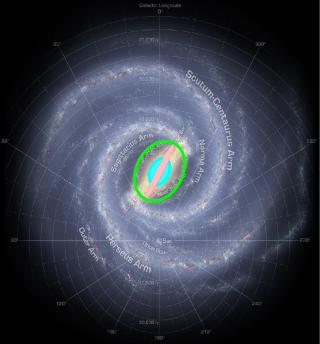
El objetivo general del proyecto es el estudio de la morfología, poblaciones estelares, cinemática y dinámica (incluyendo formación y evolución) de la Vía Láctea y sus galaxias satélites u otras del Grupo Local. El proyecto puede dividirse en dos líneas principales: I. Estructura de la Vía Láctea y galaxias cercanas. El estudio detallado de la
Martín
López Corredoira