
Bibcode
López-Corredoira, Martín
Referencia bibliográfica
The Astrophysical Journal
Fecha de publicación:
1
2025
Revista
Número de citas
4
Número de citas referidas
4
Descripción
Vertical stellar kinematics+density can be used to trace the dark matter distribution (or the equivalent phantom mass in a Modified Newtonian Dynamics (MOND) scenario) through the Jeans equations. In this paper, we want to improve this type of analysis by making use of the recent data of the 6D information from the Gaia DR3 survey in the anticenter and the Galactic poles to obtain the dynamical mass distribution near plane regions, including extended kinematics over a wide region of 8 kpc < R < 22 kpc, ∣z∣ < 3 kpc. Our conclusions are as follows: (i) the model of the spherical dark matter halos and the MOND model are compatible with the data; (ii) the model of the disky matter (with density proportional to the gas density) is excluded; (iii) the total lack of dark matter (there is only visible matter) within Newtonian gravity is compatible with the data; for instance, at solar Galactocentric radius, we obtained Σ = 39 ± 18 M ⊙ pc‑2 for z = 1.05 kpc, compatible with the expected value for visible matter alone of 44 M ⊙ pc‑2, thus allowing zero dark matter. Similarly, for R > R ⊙, z = 1.05 kpc, Σ = 28.7 ± 9.6, 23.0 ± 5.7, 16.9 ± 5.8, and 11.4 ± 6.6 M ⊙ pc‑2, respectively, for R = 10, 13, 16, and 19 kpc, compatible with visible matter alone. Larger error bars in comparison with previous works are not due to worse data or a more awkward technique but to a stricter modeling of the stellar distribution.
Proyectos relacionados
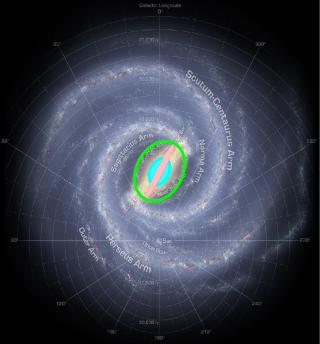
Vía Láctea y galaxias cercanas
El objetivo general del proyecto es el estudio de la morfología, poblaciones estelares, cinemática y dinámica (incluyendo formación y evolución) de la Vía Láctea y sus galaxias satélites u otras del Grupo Local. El proyecto puede dividirse en dos líneas principales: I. Estructura de la Vía Láctea y galaxias cercanas. El estudio detallado de la
Martín
López Corredoira
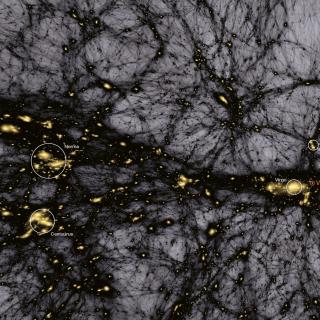
Cosmología con Trazadores de la Estructura a Gran Escala del Universo
El Fondo Cósmico de Microondas (FCM) contiene la información estadística de las semillas primigenias que han dado lugar a la formación de todas las estructuras en el Universo. Su contrapartida natural en el Universo local es la distribución de las galaxias que surgen como resultado del crecimiento gravitatorio de aquellas fluctuaciones de densidad
Francisco Shu
Kitaura Joyanes