
Bibcode
Dalla Vecchia, Claudio; Trujillo, Ignacio
Referencia bibliográfica
Astronomy and Astrophysics
Fecha de publicación:
12
2025
Revista
Número de citas
2
Número de citas referidas
1
Descripción
The physically motivated definition of galaxy size proposed recently, linked to the farther location of the in situ star formation, considerably reduces the scatter of the galaxy mass─size relation and provides a viable method to infer the galaxy stellar mass from its size. We provide a similar relation correlating the size of galaxies with the size of their dark matter haloes by leveraging the small scatter of the aforementioned relation. We analysed the simulated galaxies of the two main cosmological volumes of the EAGLE simulations and computed the size of the galaxies and their mass when mimicking the observational analysis. For central galaxies, we computed the relation between galaxy size and halo size. We show that the simulated galaxies reproduce the observed stellar mass─size relation's normalisation and slope. The scatter of this relation, 0.06 dex, matches the intrinsic scatter measured in observation. We then computed the correlation between galaxy size and halo size and found that the relation is steeper than when using the half-mass radius as a measure of size, with the scatter (0.1 dex) being a factor of two smaller than the observed relation. As well, the galaxy-to-halo mass relation derived from the simulations provides a factor of two better scatter than the observed scatter. This opens the possibility of measuring the size of dark matter haloes with greater accuracy (less than 50%, i.e. around six times better than using the effective radius) by using only deep imaging data.
Proyectos relacionados

Huellas de la Formación de las Galaxias: Poblaciones estelares, Dinámica y Morfología
Bienvenida a la página web del g rupo de investigación Traces of Galaxy Formation. Somos un grupo de investigación amplio, diverso y muy activo cuyo objetivo principal es entender la formación de galaxias en el Universo de una manera lo más completa posible. Con el estudio detellado de las poblaciones estelares como bandera, estamos constantemente
Anna
Ferré Mateu
Astrofísica Numérica: Formación y Evolución de Galaxias
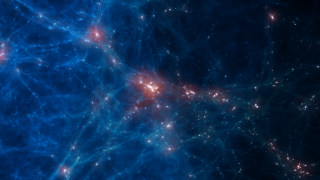
Entre las cuestiones fundamentales en Astronomía y Astrofísica están la formación y evolución de galaxias. Las escalas de tiempo y tamaño son tan astronómicas que su observación en galaxias individuales es imposible. Solo con el uso de simulaciones numéricas es posible entender la formación de estructuras cósmicas dentro del actual marco
Claudio
Dalla Vecchia