Solar and Stellar Magnetism

    General
    Description

    Magnetic fields are at the base of star formation and stellar structure and evolution. When stars are born, magnetic fields brake the rotation during the collapse of the mollecular cloud. In the end of the life of a star, magnetic fields can play a key role in the form of the strong winds that lead to the last stages of stellar evolution. During the whole adult life of a star, magnetic fields are the origin of stellar activity. Our Sun has magnetic fields that give rise to such spectacular activity that impacts the climate on Earth. The magnetic activity in other stars is, in some cases, of orders of magnitude more intense than the solar one, influencing – often drastically – the transport of chemical species and angular momentum, as well as affecting the possible planetary systems around them.

    The aim of this project is the study of the diverse manifestations of the magnetic field that can be observed in the solar atmosphere and in other stars. These include distinct structures as sunspots, weak quiet-sun fields or chromospheric and coronal features such as filaments and prominences. The following research topics have been gradually faced:

    Solar magnetism

    1. Structure and evolution of Sunspot magnetic fields.

    2. Structure and evolution of quiet Sun magnetic fields.

    3. Structure and evolution of the magnetism of the chromosphere and of chromospheric strcutures (promiences, spicules,...)

    4. Structure and evolution or coronal loops.

    5. Structure and evolution of the Sun's global field. Studies of the activity cycle.

    6. Empirical study of propagation of magnetohydrodynamic waves in magnetic structures.

    7. Empirical study of energy transfer mechanisms related with the heating of the external atmospheric layers.

    8. Empirical study of the influence of partial ionisation in the dynamics of the solar atmosphere.

    9. Participation in the European Solar Telescope project.

    Stellar magnetism

    1. Development of numerical tools to diagnose stellar magnetic fields, both in the surface and in the chromsphere.

    2. Study of magnetic fields in stellar prominences.

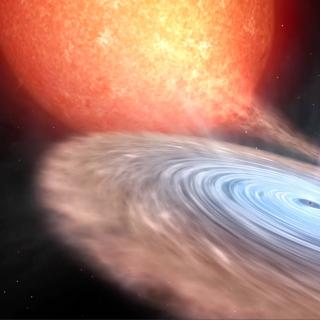
    3. Study of the role of magnetic fields in the late stages of stellar evolution.

    Principal investigator
    Project staff
    1. Spiral waves in sunspots: They have been interpreted as magnetoacoustic waves propagating from the interior to the atmosphere following the direction of the magnetic field. We have characterized the magnetic field topology, dismissing the twist of the field lines as the cause of the spiral shape (Felipe et al. 2019).
    2. Magnetic response to umbral flashes: Simultaneous spectropolarimetric observations of the chromospheric He I 10830 and Ca II 8542 lines have been used to estimate the fluctuations of the magnetic field associated to shock waves. The shocks cause expansion of the magnetic field lines (Houston et al. 2018, including A. Asensio Ramos).
    Related publications

    Non-detection of Magnetic Fields in the Central Stars of the Planetary Nebulae NGC 1360 and LSS 1362 2011ApJ...731L..33L
    Emergence of Small-scale Magnetic Loops Through the Quiet Solar Atmosphere 2009ApJ...700.1391M
    Detection of Vortex Tubes in Solar Granulation from Observations with SUNRISE 2010ApJ...723L.180S
    Assessing the Behavior of Modern Solar Magnetographs and Spectropolarimeters 2012ApJS..201...22D
    The Three-dimensional Structure of an Active Region Filament as Extrapolated from Photospheric and Chromospheric Observations 2012ApJ...748...23Y
    Magnetic field strength of active region filaments 2009A&A...501.1113K
    An active region filament studied simultaneously in the chromosphere and photosphere. II. Doppler velocities<xref ref-type="fn" rid="FN1"> 2012A&A...542A.112K
    An active region filament studied simultaneously in the chromosphere and photosphere. I. Magnetic structure 2012A&A...539A.131K
    Venus transit 2004: Illustrating the capability of exoplanet transmission spectroscopy 2011A&A...533A.136H
    Twist, Writhe, and Helicity in the Inner Penumbra of a Sunspot 2012ApJ...745..141R
    Theoretical Modeling of Propagation of Magnetoacoustic Waves in Magnetic Regions Below Sunspots 2009ApJ...694..411K
    The Electrical Current Density Vector in the Inner Penumbra of a Sunspot 2010ApJ...721L..58P
    Supersonic Continuation of the Evershed Flow Outside a Sunspot as Observed with Hinode 2009ApJ...701L..79M
    Sunspot seismic halos generated by fast MHD wave refraction 2009A&A...506L...5K
    Preliminary results on the contribution of the convection motions to the Doppler velocity signal 2008JPhCS.118a2089S
    Nonlinear Numerical Simulations of Magneto-Acoustic Wave Propagation in Small-Scale Flux Tubes 2008SoPh..251..589K
    Magnetohydrostatic Sunspot Models from Deep Subphotospheric to Chromospheric Layers 2008ApJ...689.1379K
    Magnetoacoustic Wave Energy from Numerical Simulations of an Observed Sunspot Umbra 2011ApJ...735...65F
    Magneto-acoustic Waves in Sunspots: First Results From a New Three-dimensional Nonlinear Magnetohydrodynamic Code 2010ApJ...719..357F
    Heating of the Magnetized Solar Chromosphere by Partial Ionization Effects 2012ApJ...747...87K
    Heat transfer in sunspot penumbrae. Origin of dark-cored penumbral filaments 2008A&A...488..749R
    GREGOR solar telescope: Design and status 2010AN....331..624V
    European Solar Telescope: Progress status 2010AN....331..615C
    A Geometrical Height Scale for Sunspot Penumbrae 2010ApJ...720.1417P
    Wave Propagation and Shock Formation in Different Magnetic Structures 2009ApJ...692.1211C
    The Influence of Coronal EUV Irradiance on the Emission in the He I 10830 Å and D3 Multiplets 2008ApJ...677..742C
    Solar magnetism eXplorer (SolmeX). Exploring the magnetic field in the upper atmosphere of our closest star 2012ExA....33..271P
    Channeling 5 Minute Photospheric Oscillations into the Solar Outer Atmosphere through Small-Scale Vertical Magnetic Flux Tubes 2008ApJ...676L..85K
    Where the Granular Flows Bend 2010ApJ...723L.159K
    Transverse Component of the Magnetic Field in the Solar Photosphere Observed by SUNRISE 2010ApJ...723L.149D
    The Sunrise Mission 2011SoPh..268....1B
    The Imaging Magnetograph eXperiment (IMaX) for the Sunrise Balloon-Borne Solar Observatory 2011SoPh..268...57M
    The Frontier between Small-scale Bipoles and Ephemeral Regions in the Solar Photosphere: Emergence and Decay of an Intermediate-scale Bipole Observed with SUNRISE/IMaX 2012ApJ...745..160G
    The Filter Imager SuFI and the Image Stabilization and Light Distribution System ISLiD of the Sunrise Balloon-Borne Observatory: Instrument Description 2011SoPh..268...35G
    Surface Waves in Solar Granulation Observed with SUNRISE 2010ApJ...723L.175R
    Supersonic Magnetic Upflows in Granular Cells Observed with SUNRISE/IMAX 2010ApJ...723L.144B
    SUNRISE: Instrument, Mission, Data, and First Results 2010ApJ...723L.127S
    SUNRISE/IMaX Observations of Convectively Driven Vortex Flows in the Sun 2010ApJ...723L.139B
    Retrieval of solar magnetic fields from high-spatial resolution filtergraph data: the Imaging Magnetograph eXperiment (IMaX) 2010A&A...522A.101O
    Quiet-sun Intensity Contrasts in the Near-ultraviolet as Measured from SUNRISE 2010ApJ...723L.154H