General
The NATE project encompasses two eclipses, three countries—Spain, Morocco, and the United States—as well as scientists, students, volunteers (citizen scientists), the «emptied Spain», and an outermost island region, all in a shared pursuit of knowledge.
The North African Telescope Eclipse (NATE) project, led by the Instituto de Astrofísica de Canarias (IAC), launches in Palencia on August 12 and will be consolidated a year later in Morocco for the total solar eclipse of August 2, 2027. This collaborative initiative unites the Canary Islands—an outermost island region—with the "emptied Spain," and North Africa in a shared endeavor. The project is supported by the Government of the Canary Islands.
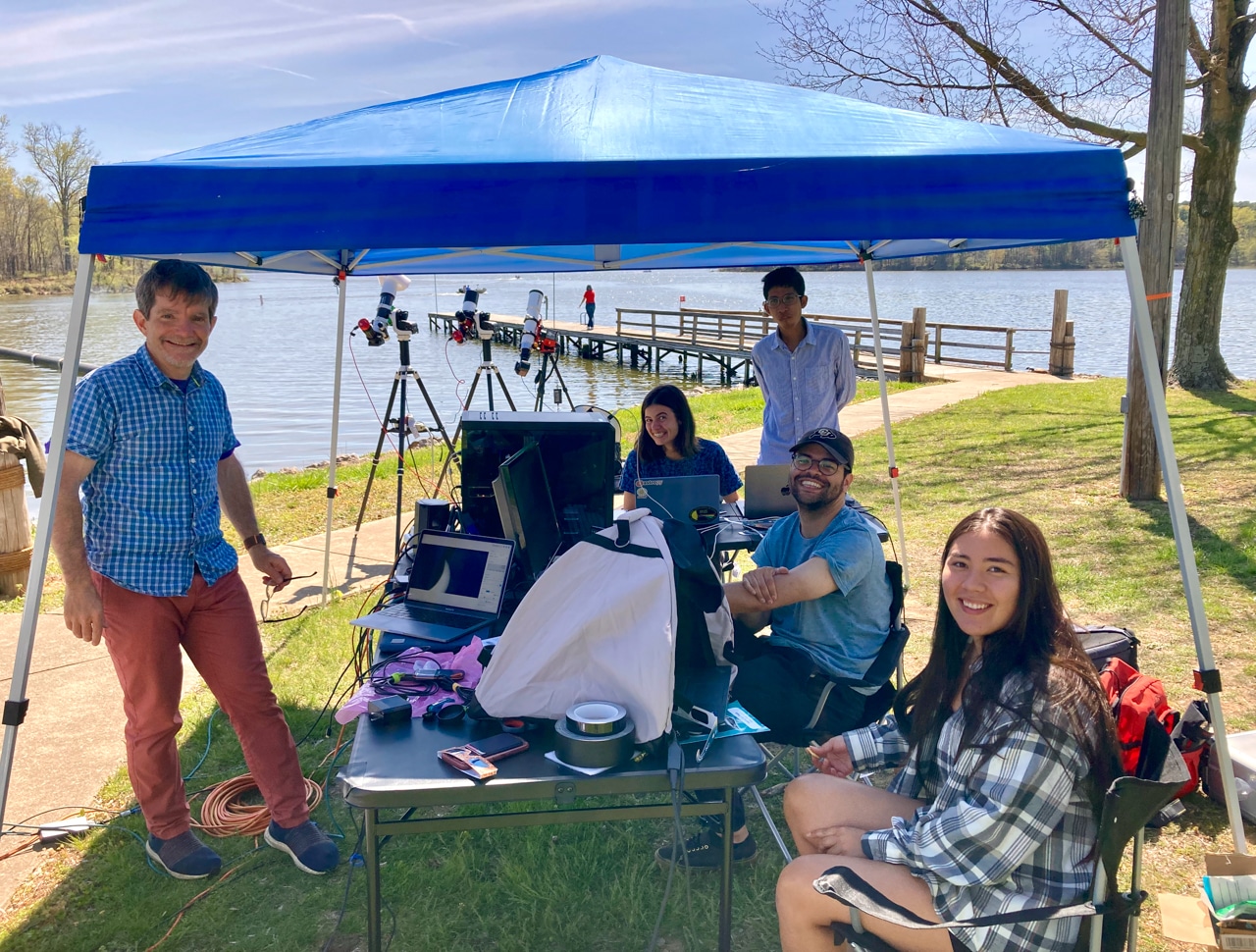
The initiative draws upon the experience gained from the successful Citizen CATE (Continental American Telescopic Eclipse) experiments, which were conducted in the United States during the 2017 and 2024 eclipses, among others, by the U.S. National Science Foundation (NSF), National Solar Observatory (NSO) and the Southwest Research Institute.
Citizen science in pursuit of the solar corona
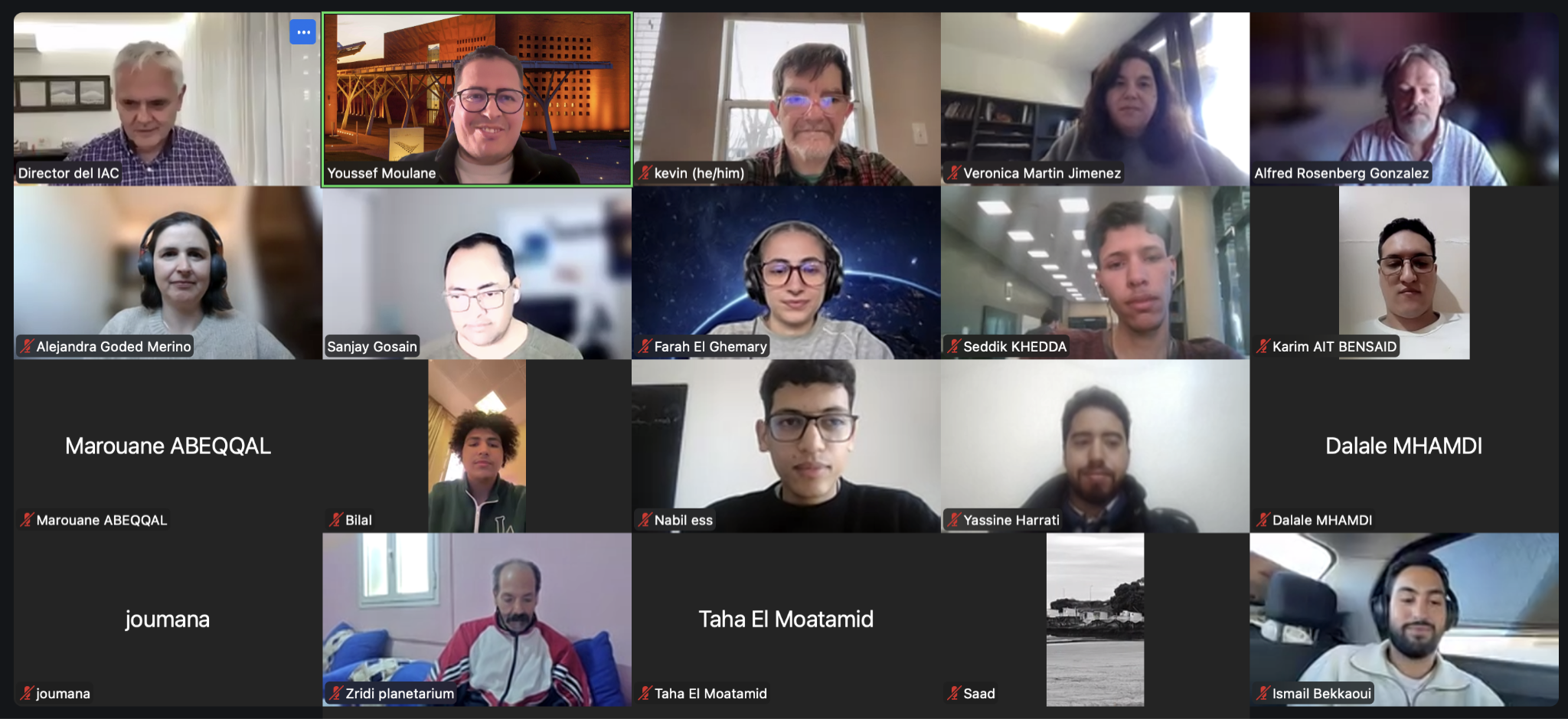
The NATE project, launched by the IAC in collaboration with other institutions, such as Mohammed VI Polytechnic University (UM6P) and the NSO, will establish a coordinated network of stations with telescopes in Morocco in 2027. These stations will be operated by teams of secondary and university students and teachers from the three participating countries, as well as astronomers and engineers from the IAC the UM6P, and the NSO.
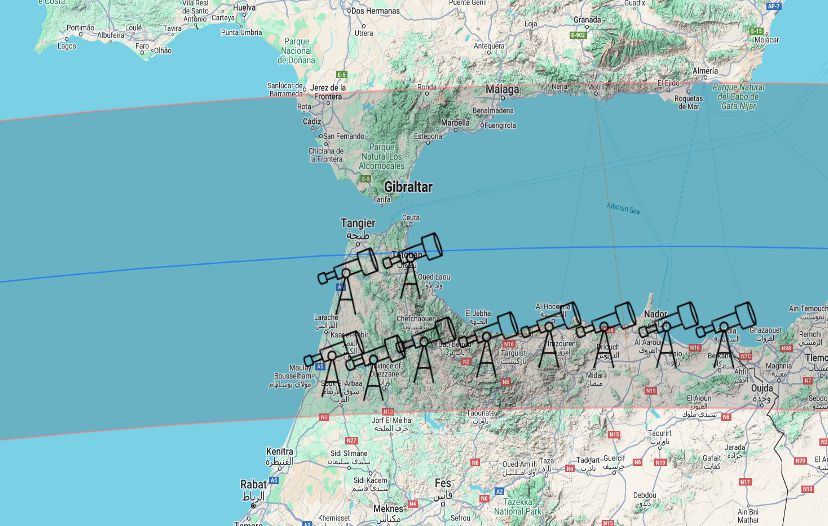
Prior to this, during this year's solar eclipse in Palencia, a crucial rehearsal and training exercise will be conducted for the various teams. The scientific work will be carried out in full view of the public, and the team of experts will also be deployed for three days in Palencia and the surrounding area to share their passion for science, astronomy, and solar physics, and to rediscover the sky as a source of wonder.
The team will facilitate talks, workshops, and safe solar observation points, coordinate all communication efforts and safety guidelines, and serve as a bridge between scientific work and citizen participation. In this way, while the necessary research protocols of the NATE experiment are being tested and rehearsed by the scientific team, the public will enjoy a fun and festive time with accessible activities.
Inclusive Eclipse
In addition, using the LightSound tool—in collaboration with the Inclusive Eclipse project of the Institute of Space Sciences (ICE-CSIC)—people with visual impairments will be able to enjoy the event at Cerro del Otero through a designated area where they will be provided with the necessary technological tools.
The “Cristo del Otero,” one of the most recognizable and emblematic locations in the capital, will be the epicenter of both the training and observation activities, as well as the program of performances and events, along with other strategic points located in Frómista, Carrión de los Condes, Osorno la Mayor, Villalcázar de Sirga, and Autilla del Pino. A program designed for the general public will bring together leading national and international eclipse experts while the public can explore the diverse offerings at various locations, as well as attend talks in Spanish, English, and Arabic.
While the short duration of the 2026 eclipse—around a minute and a half—and its low altitude on the horizon—between 12 and 2 degrees across Spain—is not ideal for scientific observation, it is good for preparing experiments. The totality phase of the 2027 eclipse in Morocco will last around four minutes at each station—with an optimal altitude of up to 40 degrees—and the combined dataset from the experiment will reveal how the solar corona changes during the extended period it will be visible in Morocco (i.e., around ten minutes). Furthermore, we are exploring stations in other countries and, in collaboration with the Spanish Institute of Oceanography, the possibility of installing a station on one of their ships along the eclipse path.
New scientific results on the dynamics of magnetic fields and plasma in this region of the solar corona can be derived from these data, and the sequence of images will provide a unique perspective of the eclipse. In addition, the necessary data processing will train participating teams in techniques applicable to a wide range of scientific research. Studying the solar corona, visible to the naked eye from Earth's surface only during total solar eclipses, is essential for understanding space weather, because it is the source of solar flares and coronal mass ejections. Understanding these phenomena allows us not only to better understand our star, but also to predict and mitigate geomagnetic storms that impact and damage our terrestrial and space technologies.
The NATE experiment team is designing and developing the training strategy for each station in Morocco. In addition, the members of each station will participate in numerous local outreach efforts of various kinds in the days leading up to the eclipse. Once the experiment is complete, the equipment acquired for each station will be donated to the host communities, leaving a lasting legacy of astronomy and solar physics across the country.
All looking to the sky
Eclipses are probably the astronomical phenomena with the greatest capacity to bring people together in their contemplation. NATE seeks to amplify that effect, creating communities that converge in a shared endeavor of knowledge, admiration, and celebration of a science capable of uniting everyone.
Members
Results
- Study of the solar corona during the longest total solar eclipse of the 21st century.
- An initiative that combines science, education, and outreach.
- An event that combines international cooperation with efforts to foster ties between depopulated regions of Spain and the outermost islands.
- Setting up, training, and equipping ten telescope teams to observe the total solar eclipse on August 2, 2027, in various locations across Morocco.
- Gathering new scientific data on the dynamics of magnetic fields and plasmas in the solar corona.
- Training teams in practical techniques for a wide variety of scientific research projects.
- Contributing to a lasting scientific legacy by donating the equipment acquired for each station to the host communities once the eclipse has ended.
- Team training during the August 12, 2026, eclipse at various locations in Palencia (Spain).
- Celebration of a fair around the eclipse, an event that will feature a program of recreational, educational, and festive activities, coinciding with the presence of the NATE teams.