The Instituto de Astrofísica de Canarias (IAC), through the UNDARK Project, Unravelling the Dark Universe from the Canary Islands Observatories, funded by the European Union, together with the Cabildo de Tenerife, the Government of the Canary Islands, the STEAM area of the Cabildo de Tenerife and Fundación CajaCanarias, promotes this initiative committed to scientific and cultural outreach, bringing science closer to society through education, literature and critical thinking.
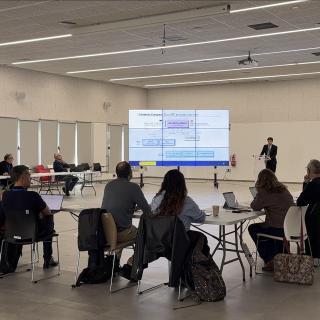
In this context, the Royal Academy of Exact, Physical and Natural Sciences of Spain hosted on Monday, May 25, the meeting of the Scientific Committee of the Cosmos Prize 2026, an event in which specialists and representatives from the scientific and cultural fields carried out the evaluation of the finalist works for this edition.
During the session, held at the Academy’s headquarters, the committee analyzed and discussed the selected publications, all focused on science communication and contemporary knowledge across different disciplines ranging from mathematics and biology to astronomy, genetics and the exploration of life.
Among the works evaluated by the scientific jury were titles such as Mirabilis, by Ersilia Vaudo; Seres sintientes, by Jackie Higgins; La vida al borde del abismo; Los células errantes; Eres tu ADN and El infinito placer de las matemáticas, forming a diverse selection that reflects the richness and interdisciplinarity of contemporary science communication.
As part of the Scientific Evaluation Committee, those present included Juan Antonio Belmonte, researcher at the Instituto de Astrofísica de Canarias (IAC); Ana Crespo, president of the Royal Academy of Exact, Physical and Natural Sciences of Spain; Licia Verde, cosmologist and astrophysicist at the Institut de Ciències del Cosmos of the University of Barcelona; and Jorge Martín Camalich and Claudia Guerrero, representatives of the UNDARK project — Unravelling the Dark Universe from the Canary Islands Observatories — of the Instituto de Astrofísica de Canarias.
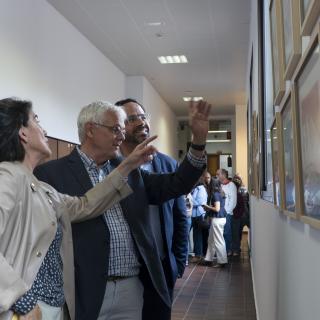
The deliberation brought together members of the scientific committee, institutional representatives and participants linked to the Cosmos Prize in a day marked by the exchange of ideas and the commitment to promoting scientific culture through literature.
The Cosmos Prize continues to consolidate itself as an initiative that connects science, society and critical thinking, bringing some of the most fascinating questions of contemporary knowledge closer to the general public through science communication works of great cultural and educational impact.
The final decision of the Cosmos Prize 2026 will be announced soon during the official awards gala.