
Bibcode
DOI
Calamida, A.; Corsi, C. E.; Bono, G.; Stetson, P. B.; Prada Moroni, P.; Degl'Innocenti, S.; Ferraro, I.; Iannicola, G.; Koester, D.; Pulone, L.; Monelli, M.; Amico, P.; Buonanno, R.; Caputo, F.; D'Odorico, S.; Freyhammer, L. M.; Marchetti, E.; Nonino, M.; Romaniello, M.
Bibliographical reference
The Astrophysical Journal, Volume 673, Issue 1, pp. L29-L33.
Advertised on:
1
2008
Journal
Citations
39
Refereed citations
30
Description
We present deep and precise photometry (F435W, F625W, F658N) of ω
Cen collected with the Advanced Camera for Surveys (ACS) on board the
Hubble Space Telescope (HST). We have identified ~6500 white dwarf (WD)
candidates, and the ratio of WD to main-sequence (MS) star counts is
found to be at least a factor of 2 larger than the ratio of CO-core WD
cooling to MS lifetimes. This discrepancy is not explained by the
possible occurrence of a He-enhanced stellar population, since the MS
lifetime changes by only 15% when changing from a canonical (Y=0.25) to
a He-enhanced composition (Y=0.42). The presence of some He-core WDs
seems able to explain the observed star counts. The fraction of He WDs
required ranges from 10% to 80% depending on their mean mass, and it is
at least 5 times larger than for field WDs. The comparison in the
color-magnitude diagram between theory and observations also supports
the presence of He WDs. Empirical evidence indicates that He WDs have
been detected in stellar systems hosting a large sample of extreme
horizontal branch stars, thus suggesting that a fraction of red giants
might avoid the He-core flash.
Based on observations collected with the Advanced Camera for Surveys on
board the Hubble Space Telescope.
Related projects
Milky Way and Nearby Galaxies
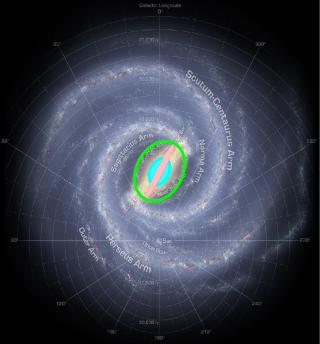
The overall aim of the project is to study the morphology, stellar populations, kinematics and dynamics (including formation and evolution) of the Milky Way and its satellite galaxies and other Local Group galaxies. The project can be divided into two main lines: I. Structure of the Milky Way and nearby galaxies. The detailed study of the
Martín
López Corredoira