
Bibcode
Anderson, Jay; Sarajedini, Ata; Bedin, Luigi R.; King, Ivan R.; Piotto, Giampaolo; Reid, I. Neill; Siegel, Michael; Majewski, Steven R.; Paust, Nathaniel E. Q.; Aparicio, Antonio; Milone, Antonino P.; Chaboyer, Brian; Rosenberg, Alfred
Bibliographical reference
The Astronomical Journal, Volume 135, Issue 6, pp. 2055-2073 (2008).
Advertised on:
6
2008
Citations
393
Refereed citations
376
Description
The ACS Survey of Globular Clusters has used Hubble Space Telescope's
Wide-Field Channel to obtain uniform imaging of 65 of the nearest
globular clusters to provide an extensive homogeneous data set for a
broad range of scientific investigations. The survey goals required not
only a uniform observing strategy, but also a uniform reduction
strategy. To this end, we designed a sophisticated software program to
process the cluster data in an automated way. The program identifies
stars simultaneously in the multiple dithered exposures for each cluster
and measures them using the best available point-spread function models.
We describe here in detail the program's rationale, algorithms, and
output. The routine was also designed to perform artificial-star tests,
and we ran a standard set of ~105 tests for each cluster in
the survey. The catalog described here will be exploited in a number of
upcoming papers and will eventually be made available to the public via
the World Wide Web.
Based on observations with the NASA/ESA Hubble Space Telescope, obtained
at the Space Telescope Science Institute, which is operated by AURA,
Inc., under NASA contract NAS 5-26555.
Related projects
Milky Way and Nearby Galaxies
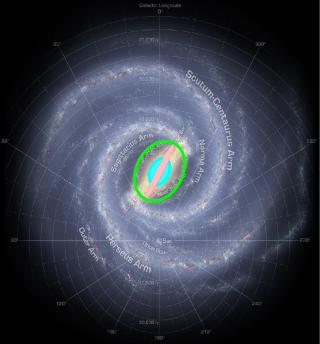
The overall aim of the project is to study the morphology, stellar populations, kinematics and dynamics (including formation and evolution) of the Milky Way and its satellite galaxies and other Local Group galaxies. The project can be divided into two main lines: I. Structure of the Milky Way and nearby galaxies. The detailed study of the
Martín
López Corredoira