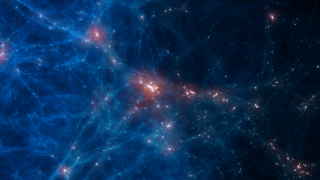
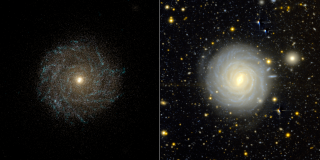
Globular clusters are dense, ancient groupings of stars that have survived the long history of galaxy formation and evolution, yet the exact processes that shape them from birth to the present day remain unclear. Here, we present AuriGLOBES (Auriga GLOBular clustEr Simulations), a new physical model designed to track how star clusters form and evolve within large-scale cosmological simulations. Using this model, we simulated nine galaxies similar in mass to the Milky Way and five lower-mass galaxies. Our simulations successfully produce realistic globular cluster systems that match observations of the Milky Way and Andromeda galaxies, including the observed scaling relationship between the total mass of a galaxy's clusters and its dark matter halo. We show that to transform an initial population of young star clusters into the mature globular clusters observed today, two mechanisms are essential: clusters must form in high-pressure, gravitationally compressed gas (through tidal forces), and they must undergo accelerated mass loss driven by internal heating from compact stellar remnants. The resulting cluster populations also mirror the spatial layouts and chemical compositions of real systems, with cluster ages directly reflecting each galaxy's star-formation history—though the Milky Way's clusters are older on average than those in our simulations, pointing to our galaxy's uniquely rapid early assembly. AuriGLOBES provides a reliable framework for studying star clusters across cosmic history and establishes a strong foundation for future models of stellar streams: the trails of stars left behind when clusters are torn apart by galactic gravity.