The 37th Canary Islands Winter School of Astrophysics, to be held from 16 to 27 November in La Laguna, will bring together more than a hundred students and early-career researchers – with almost exact gender parity – to learn about the study of massive stars, from their birth through to core-collapse supernovae and gravitational-wave events. The programme combines lectures by international specialists, practical tutorials, visits to observatories in the Canary Islands and a series of activities open to the public.
The Instituto de Astrofísica de Canarias (IAC) will host the 37th Canary Islands Winter School of Astrophysics from 16 to 27 November, dedicated this year to ‘Massive stars as cosmic tools: from birth to core-collapse supernovae and gravitational wave events’. The school will take place at the IACTEC building in the Las Mantecas Technology Park and will bring together just over a hundred participants—ten of whom will be joining remotely—from around twenty countries across Europe, the Americas, Asia and Africa.
An international and balanced profile
The school is aimed at those undertaking an advanced master’s degree, writing a doctoral thesis or in the early stages of their postdoctoral research. Participation is almost equally split, with around 50 per cent of participants being women. In terms of origin, Spain, Argentina and Germany are the most represented countries, with Latin American participants accounting for around one-fifth of the total. There are also attendees from Belgium, Chile, the United States, Austria, the Czech Republic, Canada, Switzerland, Italy, Poland, Japan, the United Kingdom, the Netherlands, Russia, Brazil, Mexico, Colombia, Morocco and Bulgaria.
Why massive stars?
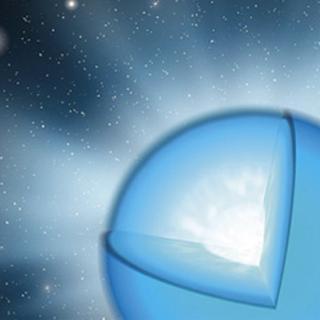
Massive stars are the driving forces behind galactic ecosystems: they have been supplying energy, momentum and chemical elements to galaxies since the first generation of stars in the Universe. Their deaths leave behind black holes and neutron stars, and they are the progenitors of the gravitational wave events detected over the last decade. Given that most of these stars are born in multiple-star systems, the programme pays particular attention to how binary interactions determine their evolution.
“The aim is for participants to understand the importance of massive stars in many branches of modern astrophysics and to be able to tackle the challenges that this field will pose in the coming decades,” explains Sergio Simón Díaz, a researcher at the IAC and coordinator of the school.
Top-level lectures and practical tutorials
The programme comprises ten lectures and six practical tutorials. The lectures combine observational and theoretical perspectives and are delivered by specialists such as Miriam García (Centre for Astrobiology, CSIC-INTA), Joachim Puls (Universitäts-Sternwarte München), Nadia Blagorodnova and Giuliano Lorio (ICCUB, Barcelona), Takashi Moriya (National Astronomical Observatory of Japan), Omar Benvenuto and Alejandra De Vito (University of La Plata, Argentina), and Jorge Casares, Montserrat Armas Padilla and Michael Abdul-Masih (IAC).
The tutorials, in small groups of around nine people, will enable participants to work with the community’s current tools: stellar atmosphere codes (with Joachim Puls), modelling the evolution of single and binary stars (with Pablo Marchant, Ghent University), quantitative spectroscopy of isolated massive stars (with Sergio Simón-Díaz, Sara Berlanas and Michael Abdul-Masih) and binary stars, population synthesis using the SEVN code, and analysis of photometric variability (with Mayte Echeveste, Gastón Escobar and Gonzalo Holgado). On the final day, each group will present the work they have carried out. Participants will also present their own research via posters and short flash talks.
“We have designed a programme that brings together, in a coordinated manner, techniques developed over decades, both theoretical and observational,” says Gastón Escobar, a postdoctoral researcher at the IAC and a member of the organising committee.
An event with a long history
The IAC Winter Schools have been held for 37 years and reflect the Institute’s commitment to training the next generation of astrophysicists. They also help to raise the international profile of the opportunities offered by the Canary Islands – and Tenerife in particular – for research, culture and the natural environment: each edition will see young scientists return to their home countries having gained first-hand experience of the observatories and the region.
The organising committee comprises Sergio Simón Díaz (IAC, chair of the local committee), Gastón Escobar (IAC), Sara Rodríguez Berlanas (University of La Laguna) and Michael Abdul-Masih (University of La Laguna). They are supported locally by a further twelve people from the IAC, the University of La Laguna and the Isaac Newton Group of Telescopes.
The Canary Islands’ observatories: part of the training programme
Participants will visit the Teide Observatory on 18 November. Those who wish to do so may also travel on 21 November to the Roque de los Muchachos Observatory (La Palma), where they will visit the Gran Telescopio CANARIAS, the MAGIC and CTAO-LST telescopes, and the William Herschel Telescope.
“For those training in astrophysics, seeing the facilities where the data we work with is collected up close changes one’s perspective. Understanding how a massive star is observed, and the limitations and possibilities of these telescopes, directly complements what they learn from lectures and tutorials,” says Michael Abdul-Masih, a Ramón y Cajal researcher at the University of La Laguna and a member of the organising committee.
Astrophysics: for society too
The school is accompanied by public outreach activities open to all, with free admission subject to availability:
- Tuesday 24 November, 5.30 pm, Museum of Science and the Cosmos: public talk ‘Between eruptions and storm surges: observing runaway stars from the skies of the Canary Islands’, given by Mar Carretero Castrillo. Born in Lanzarote, this young astrophysicist completed her PhD at the University of Barcelona with a thesis on massive runaway stars, and has been awarded an ESO Fellowship in Chile. She will discuss how Gaia and the telescopes at Roque de los Muchachos help to track these stars as they escape at high speed from where they were born.
- Thursday 26 November, 17:30–18:30, Museum of Science and the Cosmos: a special edition of ‘From the Sky to the Thesis’, in which participants from the school will tell the audience about their research into massive stars.
- Thursday 26 November, 7.00–9.00 pm, Búho de La Laguna: a special edition of Astronomy on Tap, featuring short, informal talks by participants from the school.
“A school like this makes no sense if it remains confined to the classrooms. We want Canarian society to be involved in what happens at the Winter School, to understand what we’re studying and why it matters, and to see, through young scientists such as Mar Carretero, that top-level research can also be carried out from and for the Canary Islands,” says Sara Rodríguez Berlanas, a researcher at the University of La Laguna and a member of the organising committee.
More information: https://meetings.iac.es/winterschool/2026/
Contact at the:
Sergio Simón Díaz, sergio.simon.diaz [at] gmail.com (sergio[dot]simon[dot]diaz[at]gmail[dot]com)