
The Instituto de Astrofísica de Canarias (IAC) has been awarded a new ERC Advanced Grant by the European Research Council (ERC) for the MELODY project, led by researcher Savita Mathur. This grant, one of the most prestigious and competitive in European science, supports established researchers with outstanding track records and highly innovative proposals, with the aim of promoting frontier research capable of opening up new avenues of knowledge.
MELODY’s main objective is to study the rotation and magnetic activity of Sun-like stars in order to understand in greater detail the physical processes that occur within them. In particular, the project will seek to answer a fundamental question in stellar astrophysics: how rotation and magnetic activity evolve in this type of star over time.
The proposal offers a novel approach by combining observations of stellar surfaces with the study of their interiors through asteroseismology, a technique that analyses stellar oscillations to obtain information about their internal structure. This dual perspective will make it possible to address the problem of stellar evolution with a level of detail that is difficult to achieve using traditional approaches focused solely on observable surface properties.
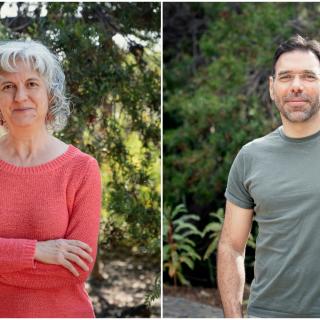
The project will be led by Savita Mathur, Staff Scientist at the IAC, whose research career has focused on the study of the structure, dynamics and magnetic activity of stars, particularly through asteroseismology. Her work forms part of an internationally recognised line of research closely linked to some of the major current challenges in astrophysics, such as the precise characterisation of stars and its relationship with galactic evolution and the study of planetary systems.
To develop MELODY, the team will use data from space missions such as NASA’s Kepler and TESS, as well as from the future PLATO mission of the European Space Agency (ESA). The project will also incorporate complementary ground-based observations, including data from instruments and telescopes such as 4MOST and the CFHT. The methodology will also rely on synthetic or simulated data, which will enable the development and validation of analysis techniques designed to obtain the most reliable measurements possible.
One of the most ambitious components of MELODY will be the use of three-dimensional magnetohydrodynamic models to interpret the physics of magnetic activity in the Sun and in other similar stars. These models will help advance our understanding of the mechanisms that connect the internal dynamics of stars with the magnetic phenomena observed on their surfaces.
“For the first time, MELODY will trace the evolution of the rotation and magnetic activity of Sun-like stars in order to understand the detailed physical processes that occur within them,” explains Mathur. According to the researcher, the project will address this question “from a new perspective, combining observations of the surfaces of numerous stars with the study of their interiors using the method of asteroseismology”.
Obtaining these observational constraints, from the interiors to the surfaces of numerous stars, will represent a radical shift in our understanding of the physical processes taking place within them. This will make it possible to continue developing dynamo models, which study how magnetic fields are generated and evolve within stars, beyond the solar case, the only star for which such detailed information is currently available.
The expected scientific impact is broad. A better understanding of stellar magnetic activity will also advance our knowledge of our own Sun and of the environments in which planetary systems can form and evolve. Stellar activity is a relevant factor in studying the habitability conditions of other planets, as it can influence their atmospheres and the possibility that life may develop.
MELODY will also pave the way for a new generation of stellar models capable of describing the evolution of Sun-like stars with greater precision. Improving these models will make it possible to estimate more accurate stellar ages, a key parameter for studying the formation and evolution of exoplanets, as well as the history of our own galaxy.
For the IAC, the award of this ERC Advanced Grant represents further international recognition of its scientific excellence and strengthens its ability to attract highly competitive funding within the European framework. ERC Advanced Grants are intended for researchers who are leaders in their field and provide funding of up to €2.5 million over five years to develop ambitious, high-impact projects.
The researcher also highlights the importance of developing this project at the IAC, both because of the Institute’s involvement in the PLATO mission and because of the historical tradition of the Canary Islands Observatories in the study of solar seismology. This combination of scientific expertise, participation in major international missions and observational capabilities places the IAC in a particularly strong position to advance MELODY’s objectives.
This new ERC Advanced Grant adds to the IAC’s recent record of success in highly competitive European calls and confirms the Institute’s strength across different areas of astrophysics. In addition to supporting a highly relevant scientific line of research, the grant will strengthen the centre’s research activity through the recruitment of staff, the development of new collaborations and the consolidation of capabilities in a key area of contemporary astrophysics.