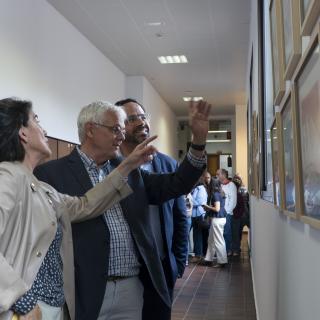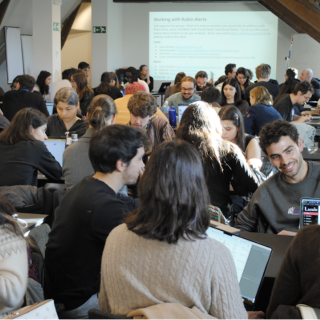

On Tuesday, the Instituto de Astrofísica de Canarias (IAC) held a workshop at the Museum of Science and the Cosmos in Tenerife (Spain), focused on promoting successful participation in the European Research Council (ERC) calls for proposals under the European Horizon Europe framework programme, the European Union’s main instrument for funding research and innovation.
The event, organised as part of the Alpha Star project (funded by the Spanish State Research Agency Ref. GPE2025-001690-P), brought together research staff from the IAC and other organisations within the regional R&D ecosystem, technical staff supporting European projects, and external guests with experience in international competitive calls for proposals, with the aim of sharing practical knowledge, fostering new opportunities for participation, and strengthening the Institute’s capacity to lead and secure high-impact projects at European level.
The event forms part of the IAC’s strategy to consolidate its international standing and strengthen its participation in European research programmes. In this context, Alpha Star helps to further improve the IAC’s competitiveness in calls for proposals focused on excellence.
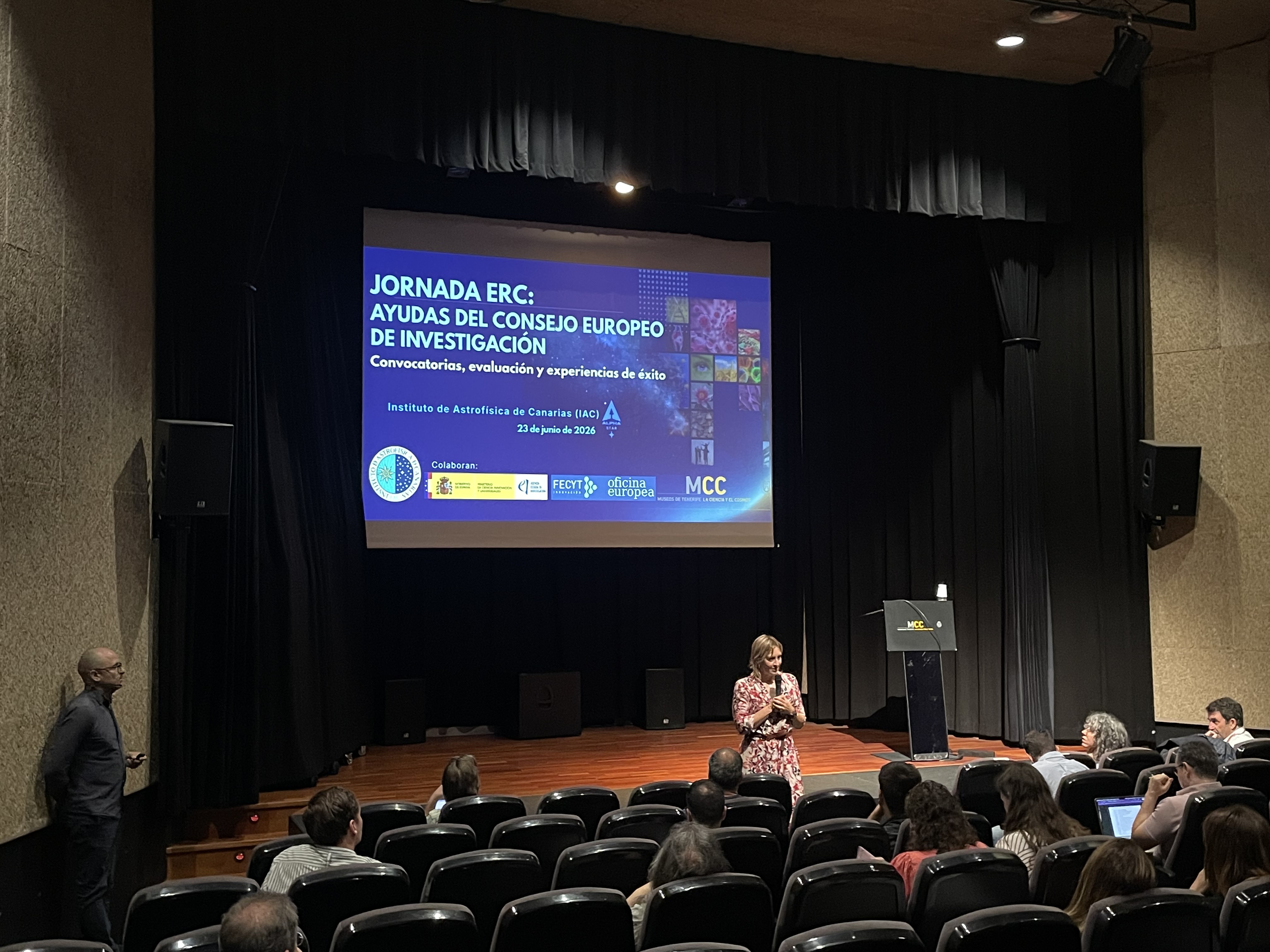
The day’s programme included a morning session devoted to the ERC’s key priorities for 2026 and progress on the 2027 Work Plan, with presentations by Gonzalo Arévalo Nieto, from the State Research Agency (AEI), and Leticia Riaza, from the Spanish Foundation for Science and Technology (FECYT). In addition, the ERC’s presence on the Universe Sciences panel was discussed, with a presentation by Anselmo Sosa (IAC) on the distribution, profiles and themes of these grants.
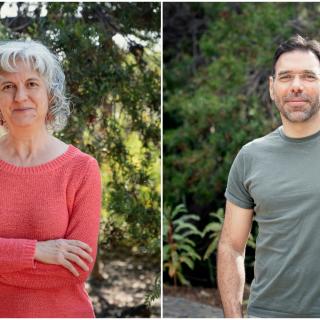
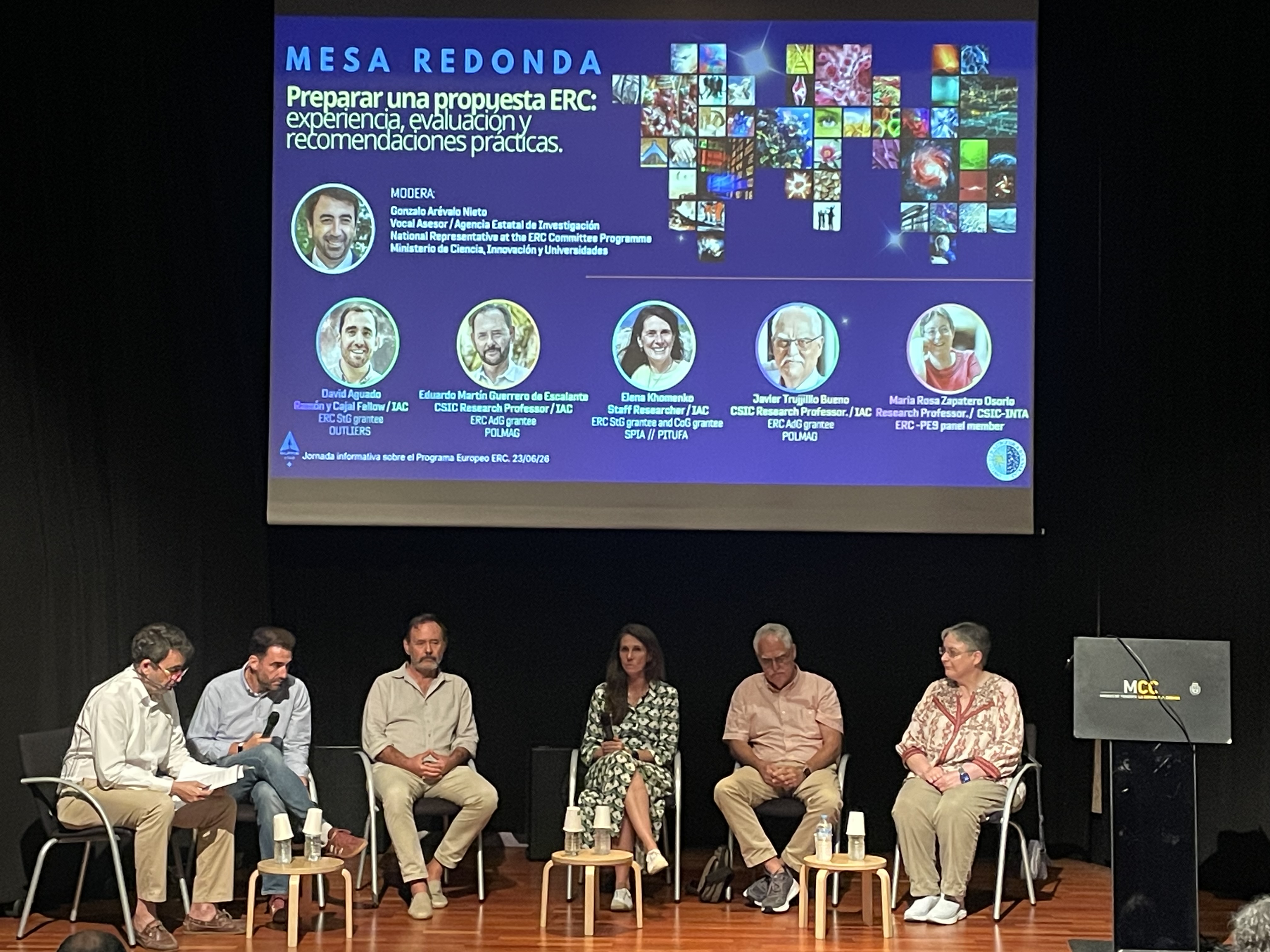
The meeting continued with a round-table discussion on how to prepare an ERC proposal, during which researchers who have secured these grants shared their experiences, evaluation criteria and practical recommendations for transforming an ambitious scientific idea into a competitive application. The discussion featured contributions from Elena Khomenko, Eduardo Martín Guerrero de Escalante, Javier Trujillo Bueno, David Aguado and María Rosa Zapatero, and was rounded off in the afternoon with a session offering individual feedback on proposals currently being prepared.
During the event, IAC researcher Savita Mathur gave a brief presentation on her new project, MELODY, which has been selected for funding under the ERC Advanced Grant 2025 call. This grant, one of the most prestigious and competitive in the European scientific community, will enable the launch of a new line of research led by the IAC.
Through initiatives of this kind, the IAC continues to consolidate an active policy of securing funding and attracting scientific leadership, in line with its commitment to research excellence and its growing presence in international networks and projects. Strengthening its participation in Horizon Europe not only enhances the IAC’s competitive capacity, but also helps to broaden its scientific, technological and strategic impact.
The holding of this meeting reinforces the IAC’s commitment to an increasingly active and structured role within the European Research Area, and underlines its role as an institution capable of combining scientific excellence, international reach and leadership in cutting-edge projects.