New Robotic Telescope
NRT
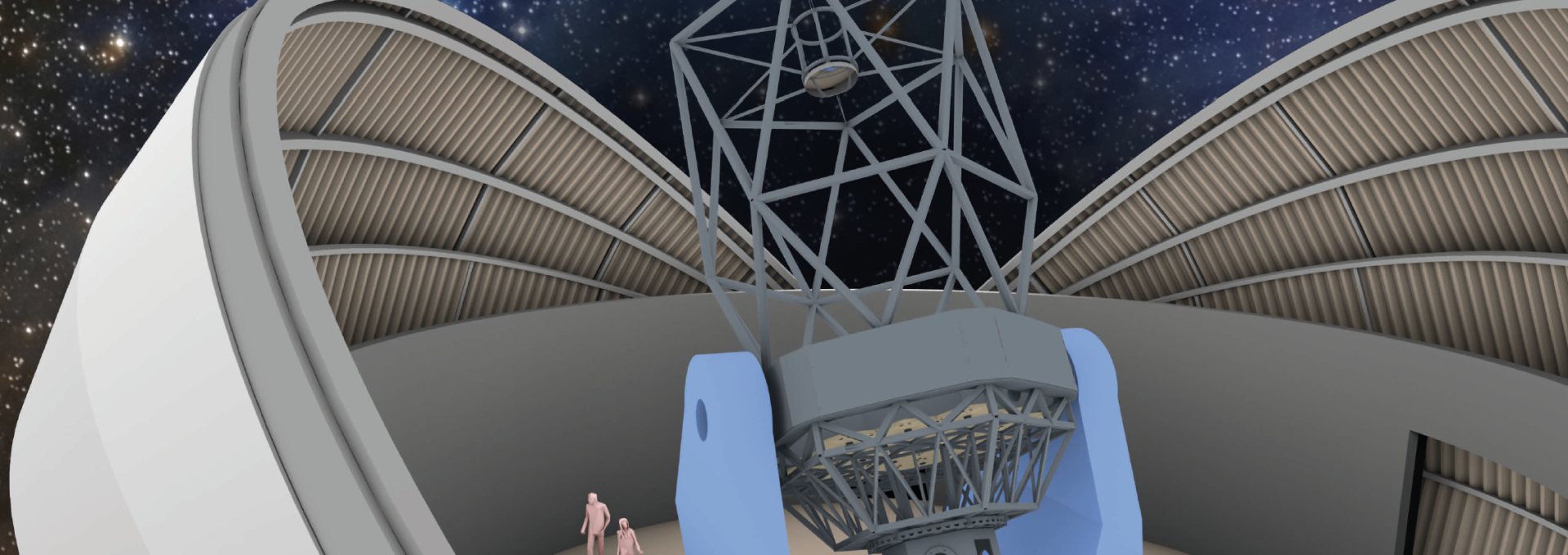
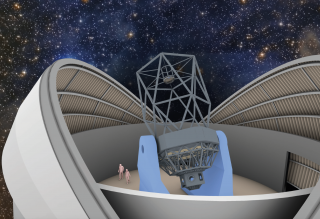
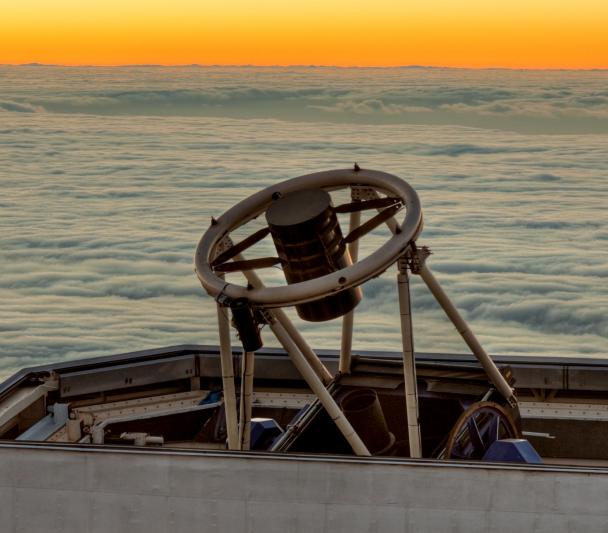
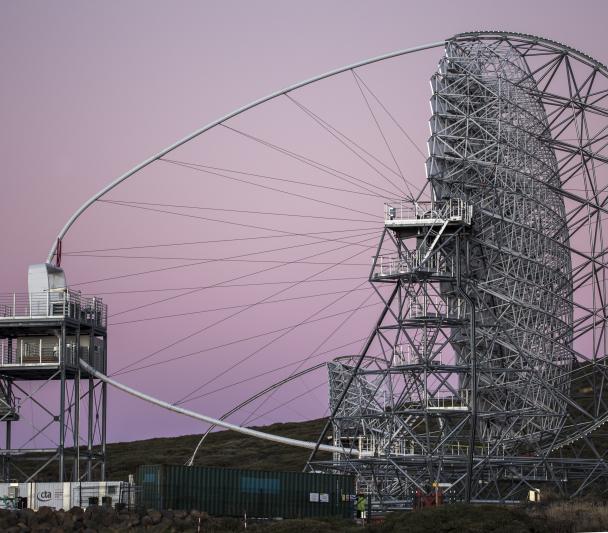
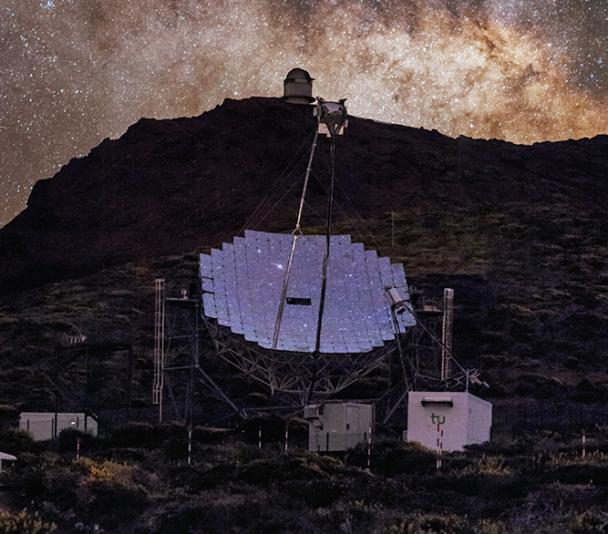
The New Robotic Telescope (NRT) will be the largest fully robotic telescope in the world. Located at the Roque de los Muchachos Observatory (La Palma), it is designed to open a new window on the dynamic Universe by rapidly following up transient phenomena such as supernova explosions, gamma-ray bursts, and the activity of supermassive black holes in active galaxies. Its robotic operation will allow extremely fast response times and flexible scheduling, making it especially powerful for observing short-lived cosmic events.
With its 4-metre aperture and advanced instrumentation, NRT will play a key role in the era of next-generation sky surveys such as the Vera C. Rubin Observatory (LSST), which will discover vast numbers of transient objects every night. NRT will provide the spectroscopic observations needed to understand these discoveries, helping astronomers classify and study the physical nature of the most energetic and rapidly evolving phenomena in the Universe.
For further information:
https://newrobotictelescope.org/
https://www.iac.es/en/projects/iactec-large-telescopes-new-robotic-telescope-nrt
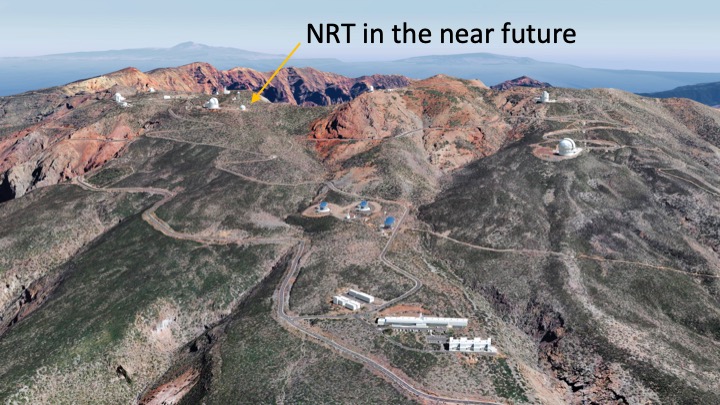
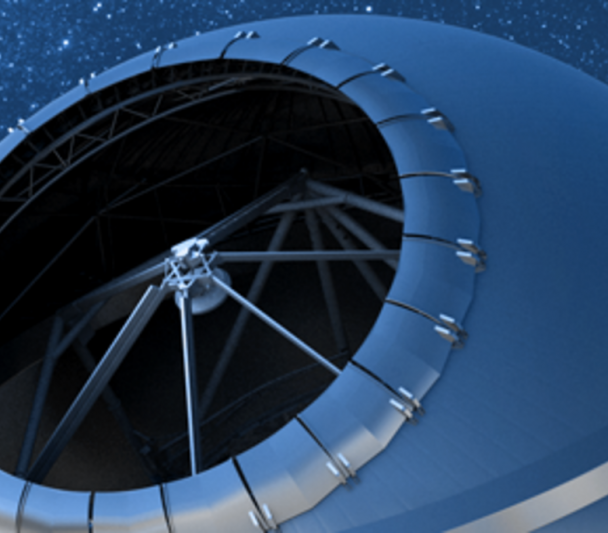
The New Robotic Telescope (NRT) will be a robotic telescope with an equivalent aperture of 4 metres, equipped with a segmented primary mirror composed of 18 segments that operate together as a single high-precision optical surface. The telescope will employ a Ritchey–Chrétien optical design, optimised to deliver high-quality imaging and a wide useful field for both scientific observations and spectroscopic studies.
The NRT will be designed for fully automatic operation, requiring no direct human intervention during the night. Its robotic control system will enable rapid responses to astronomical alerts, allowing the telescope to reposition to a new target in approximately 30 seconds. This extremely fast response capability, combined with its large aperture and scientific instrumentation, will make it an especially powerful facility for the study of transient and variable phenomena in the Universe.
The telescope will be equipped with instrumentation primarily dedicated to spectroscopy and rapid photometry, designed for the classification and physical study of supernovae, cosmic explosions, and other variable phenomena.