
The general public tends to think that the greatest mysteries hidden in the sky involve the strangest phenomena, such as black holes or those located at—in the truest sense of the word—astronomical distances. Compared to these, the celestial bodies closest to us, which accompany us every day, barely pique our interest; we take them for granted up there, so familiar that they don’t even deserve more than the occasional glance.
Perhaps that is why a total solar eclipse like the ones we will experience on August 12 and next year is so special—because it makes us look at our two most recognizable companions, the Sun and the Moon, with fresh eyes. And even though we already understand perfectly the mechanism that causes the Moon to obscure the Sun in the sky for a few minutes, this event—which breaks from the routine and the familiar—continues to touch something very intimate within us. Perhaps because it makes us realize just how exceptional it is to live in a habitable world where this phenomenon can occur at spaced-out yet predictable intervals.
The fact is, our neighbors still hold many secrets. Especially the Sun. And it is during eclipses that we have the opportunity to catch a glimpse of a part of it that harbors one of the most fascinating secrets: the corona.
The outermost layer of the Sun
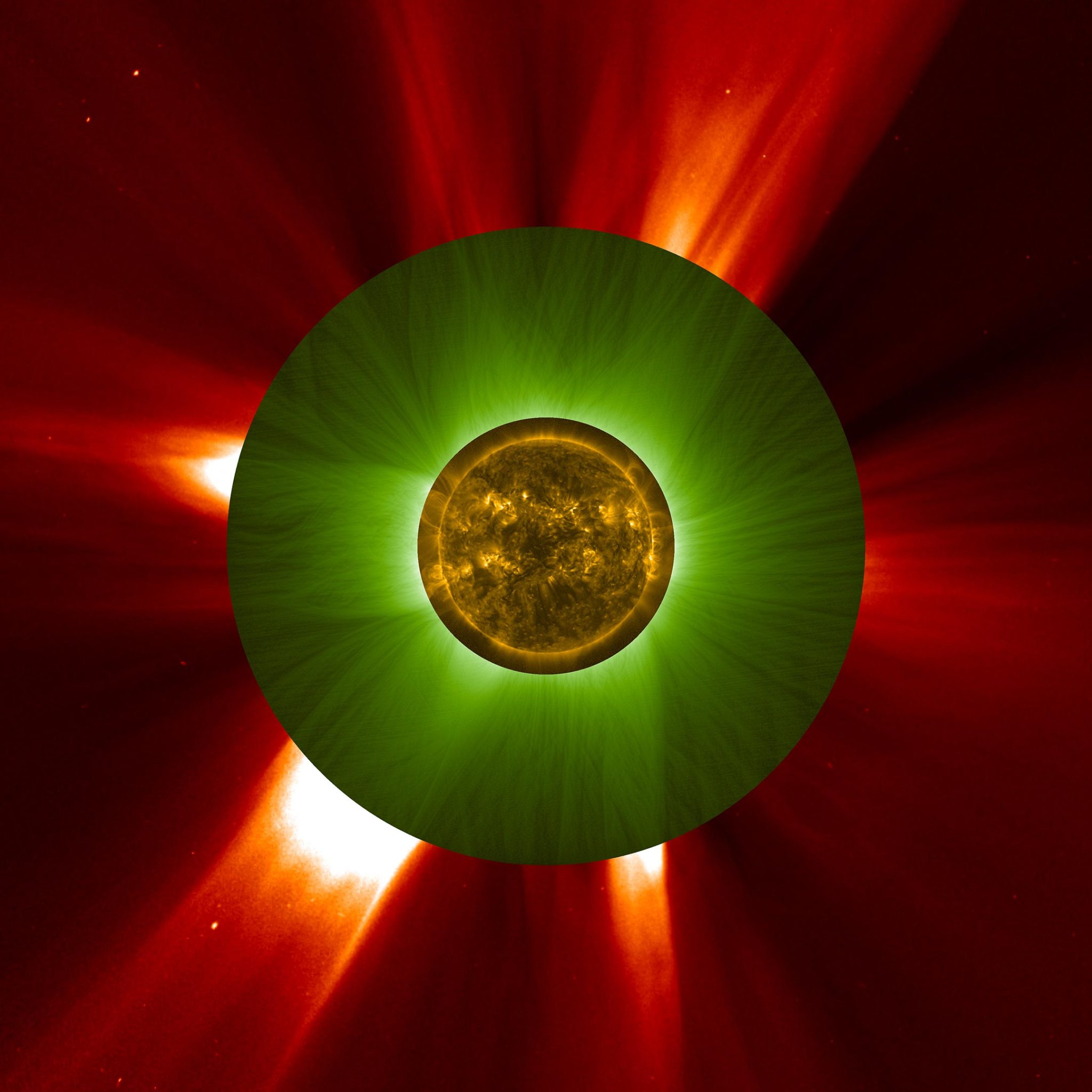
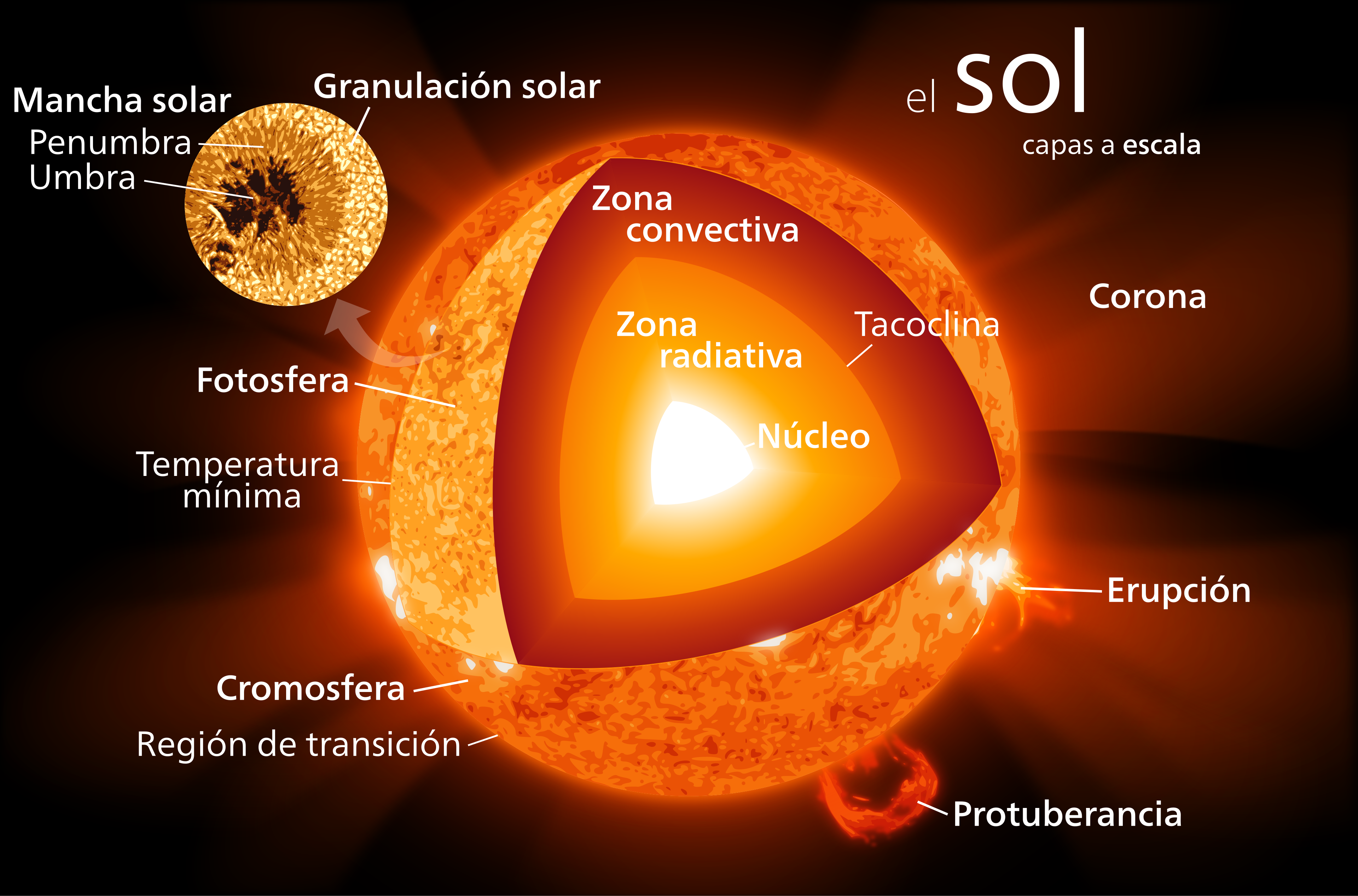
The corona is the outermost part of the Sun’s atmosphere, which also consists of (from the top down) the chromosphere and the photosphere. It is also the layer that extends the farthest; while the photosphere is about a few hundred kilometers thick and the chromosphere is about a few thousand kilometers thick, the corona extends millions of kilometers. However, its density is very low—up to millions of times lower than that of Earth’s atmosphere—which makes it practically invisible to us, since the brightness of the other layers prevents us from seeing it…
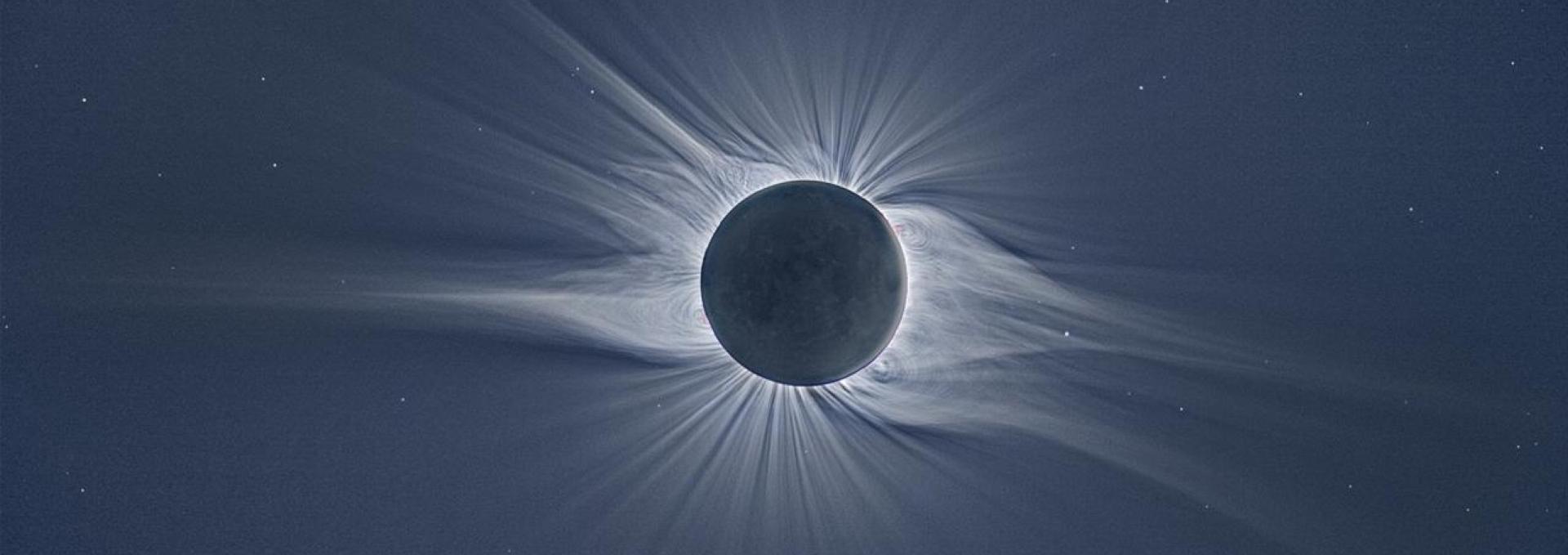
…except during total solar eclipses. In these cases, as the Sun’s disk is obscured by the Moon’s, it appears as a luminous ring with jagged edges—which is how it got its name, due to its resemblance to the crowns traditionally worn by kings. Incidentally, it is very likely that the first use of this word should be attributed to the Spanish astronomer and navigator José Joaquín Ferrer Cafranga, who used it in his description of the eclipse he observed in 1806 near New York; he was also the one who determined that it was a part of the Sun, not the Moon.
The corona is made up of plasma, and its distinctive shape is due to the effect that the Sun’s magnetic field has on it. This shape also evolves over the course of the 11-year cycles that govern the various phases of stability and instability that rule our star—and that can have such a significant impact on us. It is at the outer edges of the corona that the plasma that makes up the solar wind ultimately escapes.
The great mystery of the corona
There is something that defines the corona, and it remains unexplained for now, with no definitive answer beyond mere hypothesis. While temperatures inside the Sun reach several million kelvin, the temperature gradually decreases in the upper layers, until it reaches “only” about five thousand kelvin in the photosphere. This temperature nearly doubles in the next layer, the chromosphere, and then rises again to millions of kelvin in the corona—a phenomenon that is counterintuitive and remains the main challenge facing solar physicists, who are gradually making progress toward a possible answer.
That is why, despite the invention of the coronagraph—a device that creates artificial eclipses allowing the corona to be studied at will—and the use of satellites such as SOHO or the recent Proba-3 mission, observing and collecting data on the corona during total solar eclipses remains a unique opportunity. The NATE project, led by the IAC with support from the Government of the Canary Islands, will be carried out along the path of totality of the 2027 eclipse in Morocco and will be tested during the eclipse on August 12 in Palencia. It aims to extend the collection of images and data from the corona for as long as possible in order to better understand its evolution. This marks a new phase in the quest that inspires every scientist: finding the answer to a mystery that eludes us—and that hides in broad daylight.